you can’t “solve” fingerprinting. spoofing makes you more unique. and you cannot spoof everything. looking normal helps more than trying to hide. the only real solution to it would be creating a standard to all browsers, which is what tor does, and it’s why it works. same settings, same window size, same engine, etc. if you want fingerprinting resistance, use tor!
this would imply not being able to resize your window for example… you cant do that to a general purpose software. you need to useba tool that fits your needs. it would be the equivalent of complaining about Debian not being an amnesiac distro. Tails exists for this…
What do you mean? If all Firefox users report the same size, than you are one of many. That’s the point. It makes you stand out less. Off course this works only if you are not the only one that sticks out and its the default.
This is the philosophy of the Mullvad browser, which is basically as close as you can get to Tor for browsing the clear net. If anonymity is the goal, however, you don’t want to use it to log into any accounts.
this is one thing, do you understand how limiting it would make the browser? its not just window size, this is one example. and afaik if you spoof your window size you can break rendering of pages. again, you’re comprimising everyday usage. im not saying there isn’t a way at all, maybe there is, but it’s not some trivial thing, ive followed arkenfox for quite a few years and they’ve been saying the same. the amount of time it takes to make a redesign is nothing to making an unfingerprintable browser. if that’s even a thing. and remember that you cant spoof everything.
I didn’t say that? I’m just talking about the point you were making earlier about resizing the window. You said it would imply that not being able to resize our window for example, and I just provided a possible way to do exactly that. That’s all. And then counter argued your follow up point it would contribute to make me stand out more, that it in fact would decrease the possibility to stand out, not increase.
I’m not arguing that it would work for every webpage without breaking it, nor did I talk about the entire finger printability of a browser.
since you mention it, firefox has a feature where it launches with a generic predetermined window size so you blend in. even then screen resolution can only get them so far.
i’m not calling for firefox to be tor, just that everyday software must be more private too.
yes, tor uses that feature to make all users look the same, if you resize a bit your tor window that’s it. you can be identified. for fingerprinting to work every browser would need to look the same. this means no extensions, no difference in window size, same settings, etc. do you think that’s actually feasible for an everyday browser? really?
i know. but each point you touched can be improved upon. my point is that browsers are too transparent to third parties, and that should be one of the priorities.
how does spoofing make you more unique? If I change my browser resolution to a more common resolution that would make me less recognizable, for example.
You can lie to the website and say your resolution is 1024x768. But what happens when the JavaScript fingerprinting checks the actual width of the view port? Your view port is most likely larger than your stated screen size.
Sounds like a limitation of the spoofing technology, and shameless spying on the websites part. I’m not a tech expert but is there nothing that you can lie to the websites about and they can’t check or verify it? For example the list of fonts?
That one in particular you potentially could, though it does raise the question of what would happen if you report you have a don’t you don’t, and the site tries to push content using that font.
I had an add-on at one point (or possibly a uBlock origin setting?) to block all remote fonts and just use a local one. Might work fine if it’s integrated with something like that.
because when you spoof whatever is fingerprinting you sees that you’re actually providing fake data, so now you enter the list of the “hidden” instead of blending in. this is the core philosophy of tor browser, and a known fact. if you read partially the article i linked it talks about this.


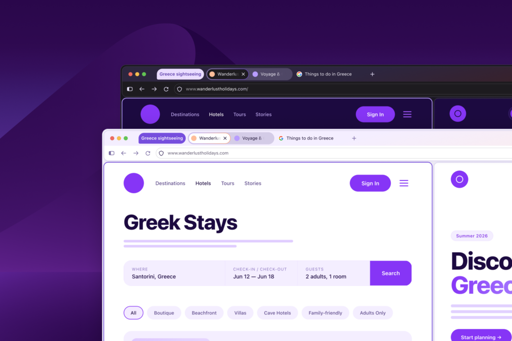
eh it looks cool and all, but why do we need a redesign every 6 months?
shouldn’t they be using those man-hours to like, solve the fingerprinting problem for example?
https://arkenfox.github.io/thorin/items/02browserfingerprinting.html
you can’t “solve” fingerprinting. spoofing makes you more unique. and you cannot spoof everything. looking normal helps more than trying to hide. the only real solution to it would be creating a standard to all browsers, which is what tor does, and it’s why it works. same settings, same window size, same engine, etc. if you want fingerprinting resistance, use tor!
there you go. do that to firefox.
this would imply not being able to resize your window for example… you cant do that to a general purpose software. you need to useba tool that fits your needs. it would be the equivalent of complaining about Debian not being an amnesiac distro. Tails exists for this…
Or it would let you resize and report the same size as everyone else.
that’s spoofing, spoofing makes you stand out more…
What do you mean? If all Firefox users report the same size, than you are one of many. That’s the point. It makes you stand out less. Off course this works only if you are not the only one that sticks out and its the default.
This is the philosophy of the Mullvad browser, which is basically as close as you can get to Tor for browsing the clear net. If anonymity is the goal, however, you don’t want to use it to log into any accounts.
this is one thing, do you understand how limiting it would make the browser? its not just window size, this is one example. and afaik if you spoof your window size you can break rendering of pages. again, you’re comprimising everyday usage. im not saying there isn’t a way at all, maybe there is, but it’s not some trivial thing, ive followed arkenfox for quite a few years and they’ve been saying the same. the amount of time it takes to make a redesign is nothing to making an unfingerprintable browser. if that’s even a thing. and remember that you cant spoof everything.
I didn’t say that? I’m just talking about the point you were making earlier about resizing the window. You said it would imply that not being able to resize our window for example, and I just provided a possible way to do exactly that. That’s all. And then counter argued your follow up point it would contribute to make me stand out more, that it in fact would decrease the possibility to stand out, not increase.
I’m not arguing that it would work for every webpage without breaking it, nor did I talk about the entire finger printability of a browser.
since you mention it, firefox has a feature where it launches with a generic predetermined window size so you blend in. even then screen resolution can only get them so far.
i’m not calling for firefox to be tor, just that everyday software must be more private too.
yes, tor uses that feature to make all users look the same, if you resize a bit your tor window that’s it. you can be identified. for fingerprinting to work every browser would need to look the same. this means no extensions, no difference in window size, same settings, etc. do you think that’s actually feasible for an everyday browser? really?
i know. but each point you touched can be improved upon. my point is that browsers are too transparent to third parties, and that should be one of the priorities.
how does spoofing make you more unique? If I change my browser resolution to a more common resolution that would make me less recognizable, for example.
You can lie to the website and say your resolution is 1024x768. But what happens when the JavaScript fingerprinting checks the actual width of the view port? Your view port is most likely larger than your stated screen size.
Sounds like a limitation of the spoofing technology, and shameless spying on the websites part. I’m not a tech expert but is there nothing that you can lie to the websites about and they can’t check or verify it? For example the list of fonts?
That one in particular you potentially could, though it does raise the question of what would happen if you report you have a don’t you don’t, and the site tries to push content using that font.
I had an add-on at one point (or possibly a uBlock origin setting?) to block all remote fonts and just use a local one. Might work fine if it’s integrated with something like that.
because when you spoof whatever is fingerprinting you sees that you’re actually providing fake data, so now you enter the list of the “hidden” instead of blending in. this is the core philosophy of tor browser, and a known fact. if you read partially the article i linked it talks about this.
I think he meant amount of human hours spent on total bs like redesign and real engine improvements, nithing more.
Not sure I’d be okay trusting designers to solve fingerprinting.
i’d trust mozilla to pay for developers instead of yearly redesigns.